
How to Plan a Founder Retreat: Format, Budget and Agenda That Works
 By Byron Dempsey · 8 min read · Published 14 October 2026
To plan a founder retreat, decide exactly who it is for, start small, give the days real structure and keep the number of people in line with what you can fill. Get those four things right and the venue, the food and the activities become much easier decisions.
I run retreats for a living, so this is my view from the organiser’s side. It is for founders thinking about running their own, whether for a team, a group of friends or a wider community.
Start with who it is for, not where it is
The first thing I tell anyone is to get clear on who the retreat is for and what the niche is. Mine is for people in their 20s and 30s running a business based in Australia or New Zealand.
Yours might be for women, or for men. It might be for a certain age group or a certain industry. Whatever it is, it needs to be a niche. A retreat that is “for founders” in general gives people no reason to pick it over anything else, and no reason to feel like the room was built for them.
Choose the people first. The location, the agenda and the price all follow from that.
Pick a format
There are four common shapes, and they suit different goals.
- Solo: one person, time away, no one else to coordinate. Good for thinking, not for feedback.
- Team: your own people, usually to plan or reset together. The group already exists, so the work is about the agenda.
- Peer group: founders from different businesses who come together to compare notes. You need a way to find and fill the group.
- Hosted: someone else designs and runs it, and you attend.
If you are organising for strangers rather than your own team, you are taking on the hardest part, which is filling it. That brings me to the biggest mistake.
Go small before you go big
The most common mistake I see is people going too big too fast. They underestimate how hard it is to fill a retreat. They book a 10 or 20 person villa, then end up giving out discounts and doing anything they can to fill it.
Start small and prove the concept. Take photos and videos, collect what people say about it, and then scale. A small, full retreat with good proof behind it is a much better base than a large, half-empty one.
What a good agenda looks like
A good day is actually quite structured. A lot of organisers give way too much free time because they think that is what people want. People crave structure and certainty, even if they don’t say it.
Realistically, I would plan for about two to three hours of free time across the day, and often the evening ends up being free time anyway. Everything else should have a clear purpose and a clear start and finish.
When you build the schedule, ask of every session what someone will walk out with. If you cannot answer, cut it or replace it.
What it costs, and where the money goes
It costs as much or as little as you want, and it depends mostly on how many people go. The more people you have, the more economies of scale kick in and you start making money.
The flip side is that it is very hard to make money on a retreat of five, six or seven people unless you charge a very high premium. If you are planning a small first run, treat it as an investment in proof rather than a profit centre.
The mistakes that turn it into an expensive holiday
Beyond going too big, a few patterns show up again and again:
- No clear niche, so nobody feels the room is for them.
- Too much free time and not enough structure.
- Pricing built on a full room that never fills.
- No plan for capturing photos, video and feedback to help fill the next one.
Who should not plan their own yet
Most of the time you shouldn’t plan your own retreat unless you have a very clear target market, you know what you’re doing and you’ve run events before.
If that is not you, the cheaper route is to partner with someone, or find someone who already knows what they are doing. You can learn the mechanics from the inside and still get the benefit of the week.
A checklist before you book anything
- Who is this for, in one sentence?
- What niche makes it clearly different from other retreats?
- How many people can I realistically fill, and how will I find them?
- Does the price still work if the room is not full?
- Is every day structured, with a few hours of free time and no more?
- How will I capture photos, video and feedback?
- Have I run events before, or should I partner with someone who has?
How we run ours at Driven Young
We run a hosted peer group retreat, so you can see one example of these choices in practice. It is seven days, Monday to Sunday, in a private villa in Canggu, Bali, for 20 founders and business owners in their 20s and 30s. There are no phones and no alcohol.
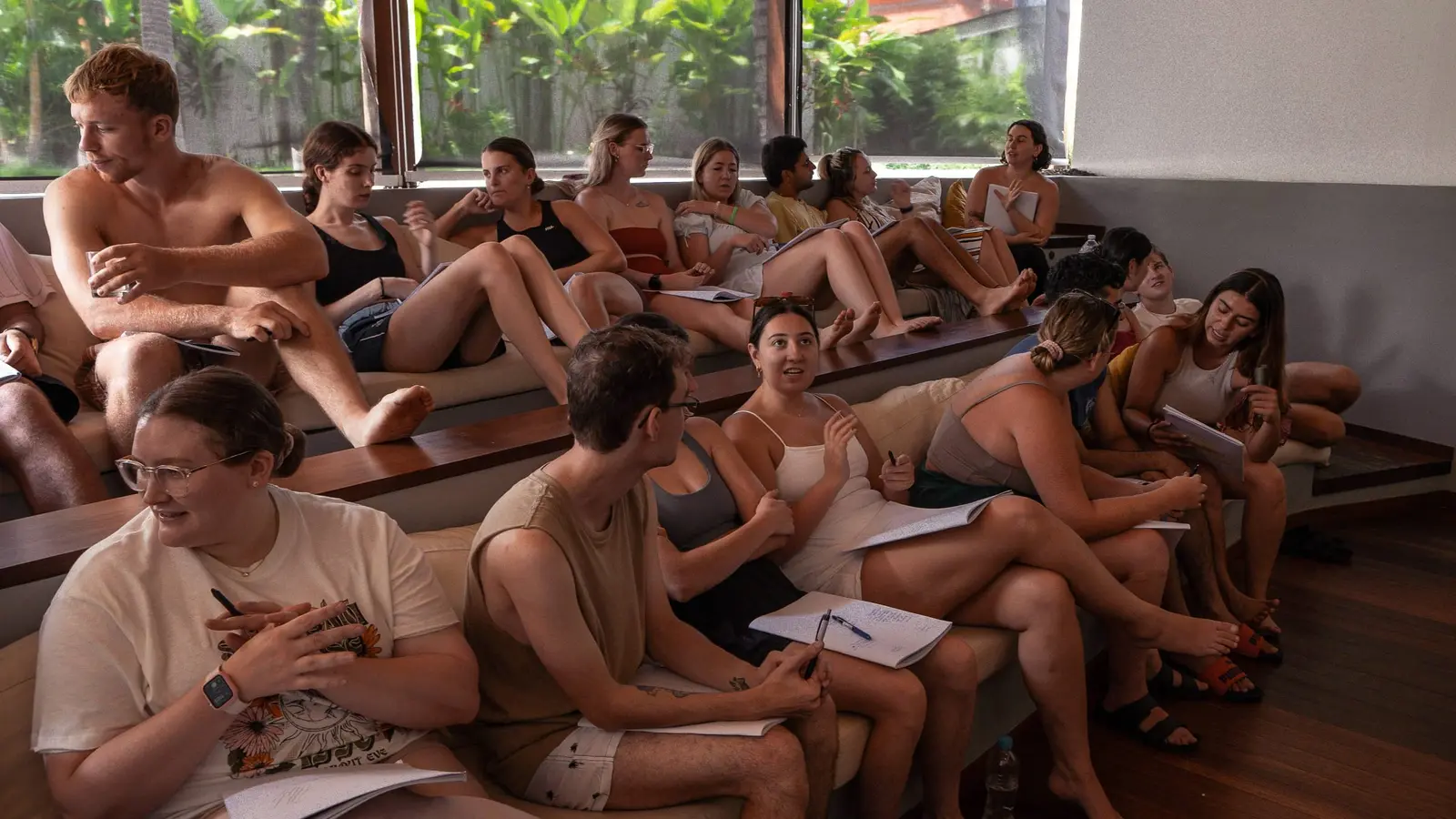
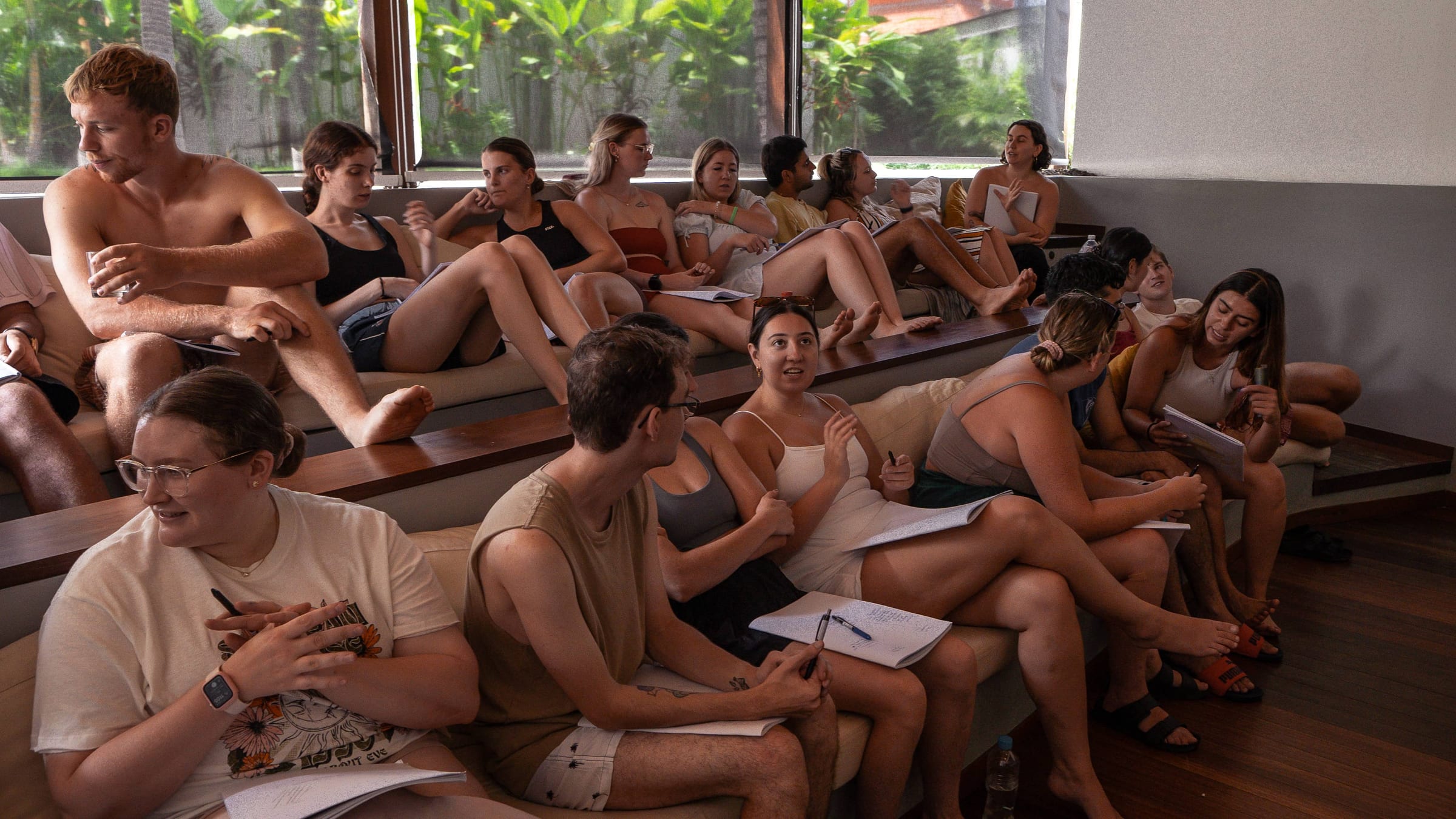
Mornings are breathwork, yoga, ice baths and sauna. The days are business strategy, systems, AI and marketing, done with pen and paper. There is a sunrise volcano hike, and a private chef handles the food. You can see the full week on the itinerary and the place on the villa page.
At a glance
- Next dates: Founders Retreat 3 runs 14 to 20 December 2026, and Founders Retreat 4 runs 29 March to 4 April 2027.
- Place: private villa, Canggu, Bali.
- Group: 20 founders and business owners.
- Price: from $4,999 per person plus GST in a shared room, up to $8,999 per room plus GST for a couples bungalow.
- How to join: application only. Details are on the founders retreat page, and there is a separate page for business owners.
Here is what a few past attendees said:
Exactly what I didn’t know I needed. A reset, a push, and a room full of people who just get it
Brielle Hall, Studio 6714
The biggest thing for me was the people. Being surrounded by like-minded founders, having real conversations, sharing challenges, and supporting each other whilst also celebrating the wins. It’s something you don’t realise you’re missing until you’re in it.
Kirsten Mitchell, Sutherland Shire Raw
If you’re tossing up, do it. This is the space and time you need to reset and grow, both for yourself and your business.
Paris Mcneil, Thriving Futures Co
You can read more on the reviews page, or see how we answer the common questions in Is Driven Young worth it?.
FAQ
What is included in a Driven Young retreat? Your room, every meal, all sessions and activities, and a welcome pack. Flights are not included. Prices are quoted plus GST.
Can I pay for the retreat in instalments? Yes. Payment plans are available for a $500 fee. Shared rooms are gendered, so you are placed with people of the same gender.
Who can apply to a Driven Young retreat? It is application only and built for founders and business owners in their 20s and 30s with an established business making $100K or more in revenue. The average attendee is 27 and runs a business turning over $500K to $5M a year.
Are phones and alcohol really off the table? Yes. The week is run with no phones and no alcohol, so everyone is in the room and in the conversation.
What does a day look like on your retreat? Mornings start with breathwork, yoga, ice baths and sauna. The days are working sessions on business strategy, systems, AI and marketing, done with pen and paper. There is also a sunrise volcano hike, and meals come from a private chef.
What do past attendees say about it? Driven Young holds a 4.9 out of 5 rating on Trustpilot from 139 reviews, and 60 founders have attended since early 2024. You can read the reviews on our reviews page.
About the author
I’m Byron Dempsey, the founder of Driven Young. I run founder retreats in Bali for business owners in their 20s and 30s, and you can read more on the about page. If this sounds like the week you need, applications are open.
Frequently asked questions
What is included in a Driven Young retreat?
Your room, every meal, all sessions and activities, and a welcome pack. Flights are not included. Prices are quoted plus GST.
Can I pay for the retreat in instalments?
Yes. Payment plans are available for a $500 fee. Shared rooms are gendered, so you are placed with people of the same gender.
Who can apply to a Driven Young retreat?
It is application only and built for founders and business owners in their 20s and 30s with an established business making $100K or more in revenue. The average attendee is 27 and runs a business turning over $500K to $5M a year.
Are phones and alcohol really off the table?
Yes. The week is run with no phones and no alcohol, so everyone is in the room and in the conversation.
What does a day look like on your retreat?
Mornings start with breathwork, yoga, ice baths and sauna. The days are working sessions on business strategy, systems, AI and marketing, done with pen and paper. There is also a sunrise volcano hike, and meals come from a private chef.
What do past attendees say about it?
Driven Young holds a 4.9 out of 5 rating on Trustpilot from 139 reviews, and 60 founders have attended since early 2024. You can read the reviews on our reviews page.